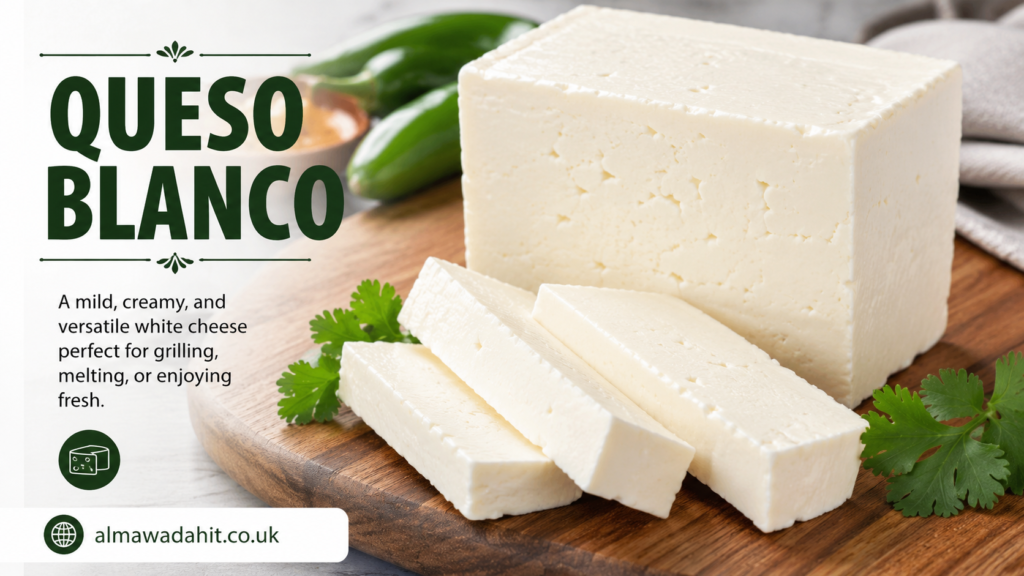

Few cheeses are as versatile and approachable as queso blanco. Known for its mild flavor and firm texture, this fresh white cheese has been a staple in Latin American kitchens for generations. Whether crumbled over tacos, added to salads, or served alongside traditional dishes, it offers a unique taste that complements a wide variety of foods.
As interest in international cuisine continues to grow, many home cooks and food enthusiasts are discovering the appeal of queso blanco cheese. Its simple ingredients, easy preparation, and impressive versatility make it a favorite among beginners and experienced cooks alike. This guide explores what queso blanco is, how it is made, its nutritional value, and the many ways you can enjoy it.
What Is Queso Blanco?
Definition of Queso Blanco
Queso blanco is a fresh white cheese commonly found throughout Mexico, Central America, South America, and the Caribbean. The name translates directly to “white cheese” in Spanish, although the term may refer to slightly different varieties depending on the region.
Unlike aged cheeses, queso blanco is typically consumed shortly after production. It has a mild flavor, a slightly tangy taste, and a firm yet crumbly texture. One of its most distinctive characteristics is that it softens when heated but generally does not melt completely, making it ideal for cooking.
Origins and Cultural Significance
The history of queso blanco is deeply connected to traditional Latin American food culture. For centuries, families have made fresh cheese at home using simple ingredients such as milk and an acidic agent like vinegar or lemon juice.
Today, queso blanco remains an important ingredient in many regional dishes. From Mexican street food to Caribbean breakfasts, the cheese plays a valuable role in preserving culinary traditions while adapting to modern recipes and cooking styles.
How Queso Blanco Is Made
Traditional Production Process
One reason queso blanco remains popular is its straightforward production method. The cheese is made through acid coagulation, a process that separates milk solids from liquid whey without requiring complex equipment.
The milk is heated to a specific temperature before an acidic ingredient is added. As the acidity increases, curds begin to form. These curds are collected, drained, and pressed to achieve the desired consistency. The result is a fresh cheese with a clean flavor and firm structure.
Ingredients Used in Queso Blanco
Traditional homemade queso blanco requires only a handful of ingredients. Whole milk serves as the foundation, while vinegar, lemon juice, or citric acid triggers the curdling process. Salt is often added for flavor.
Because the ingredient list is short, quality matters. Fresh milk generally produces better flavor and texture. This simplicity is one reason many people choose to make homemade queso blanco in their own kitchens.
Types of Queso Blanco
Fresh Queso Blanco
Fresh queso blanco is the most common variety. It features a soft, crumbly texture and mild flavor that works well in salads, tacos, soups, and side dishes.
Its light taste allows it to complement other ingredients without overpowering them. This versatility makes it one of the most frequently used fresh cheeses in Latin American cuisine.
Frying Queso Blanco
Some regional versions are specifically produced for frying. These varieties have a firmer texture that allows them to maintain their shape when exposed to high heat.
When fried, the exterior develops a golden crust while the inside remains soft. This preparation method is especially popular in Caribbean countries, where fried cheese is often served for breakfast or as a snack.
What Does Queso Blanco Taste Like?
Flavor Characteristics
The flavor of queso blanco is often described as mild, creamy, and slightly tangy. Unlike stronger cheeses, it does not have an intense aroma or sharp taste.
This subtle profile allows it to blend easily into many recipes. Whether paired with vegetables, meats, grains, or fruits, queso blanco adds richness without dominating the dish.
Texture and Consistency
Texture is one of the defining features of this cheese. It is firm enough to slice or crumble but remains pleasantly soft when eaten.
Because queso blanco resists melting, it maintains its shape during cooking. This unique quality makes it particularly useful in recipes that require a cheese capable of holding its structure under heat.
Queso Blanco Compared with Other Cheeses
Queso Blanco and Queso Fresco
Many people confuse queso blanco and queso fresco because both are fresh white cheeses. While they share similarities, queso fresco is often softer and slightly more moist.
Queso blanco tends to be firmer and more resistant to melting. Depending on the recipe, either cheese may be suitable, but understanding their differences can improve cooking results.
Queso Blanco and Paneer
Paneer, a popular cheese in Indian cuisine, is remarkably similar to queso blanco. Both are made using acid-coagulated milk and are known for maintaining their shape during cooking.
The main distinction lies in seasoning and culinary use. Paneer is commonly incorporated into curries, while queso blanco is frequently used in Latin American dishes.
Queso Blanco and Oaxaca Cheese
Oaxaca cheese differs significantly because it is designed to melt. It features a stretchy texture similar to mozzarella and is commonly used in quesadillas.
Queso blanc, by contrast, remains firm when heated. Choosing between the two depends largely on the desired texture in a recipe.
Nutritional Value of Queso Blanco
Macronutrients and Protein
Queso blanc provides a valuable source of protein, making it a satisfying addition to meals and snacks. Protein supports muscle maintenance and contributes to feelings of fullness.
The cheese also contains fats that provide energy and enhance flavor. Nutritional values vary by brand and preparation method, but most varieties offer a balanced combination of nutrients.
Vitamins and Minerals
In addition to protein, queso blanc contains important minerals such as calcium and phosphorus. These nutrients contribute to strong bones and healthy teeth.
Many varieties also provide vitamins that support overall wellness. When enjoyed as part of a balanced diet, queso blanc can be a nutritious ingredient in everyday meals.
Popular Uses of Queso Blanco
Traditional Latin American Dishes
One of the most common uses for queso blanc is as a topping. It is frequently crumbled over tacos, enchiladas, tostadas, and rice dishes.
Its mild flavor pairs especially well with spicy ingredients. The cheese helps balance heat while adding texture and richness.
Salads, Soups, and Side Dishes
Queso blanc also works exceptionally well in fresh preparations. Crumbled cheese can add depth to salads, roasted vegetables, and grain bowls.
Soups benefit from its creamy texture as well. A small amount sprinkled on top can transform a simple dish into something more satisfying and flavorful.
Fried and Grilled Preparations
Because it holds its shape under heat, queso blanc is ideal for grilling and frying. The exterior becomes lightly crisp while the interior remains tender.
This cooking method creates an appealing contrast in texture and highlights the cheese’s naturally mild flavor.
Can Queso Blanco Melt?
Understanding Heat Behavior
A common question among home cooks is whether queso blanc melts. Unlike cheeses such as mozzarella or cheddar, queso blanc does not fully liquefy when heated.
Instead, it softens and becomes creamier while maintaining its overall shape. This characteristic results from the way the cheese is produced.
Best Cooking Methods
Because of its unique structure, queso blanc works best in recipes where maintaining shape is desirable. Grilling, frying, baking, and pan-searing are excellent options.
These methods allow the cheese to develop flavor and texture without losing its form, making it a versatile ingredient in many cuisines.
How to Make Queso Blanco at Home
Basic Preparation Method
Making homemade queso blanc is surprisingly simple. Fresh milk is heated before an acidic ingredient is introduced. As curds form, they are separated from the whey and transferred to cheesecloth.
The curds are then drained and gently pressed. Depending on the desired consistency, the cheese may be left soft or pressed more firmly.
Helpful Tips for Success
Using high-quality milk can significantly improve results. Fresh ingredients often lead to better texture and flavor.
Patience during draining is also important. Allowing excess moisture to leave the curds helps create a firmer, more traditional queso blanc.
How to Store Queso Blanco
Refrigeration Practices
Because queso blanc is a fresh cheese, proper storage is essential. It should be kept refrigerated in an airtight container to preserve freshness.
Storing it correctly helps maintain flavor, texture, and food safety. Fresh cheese generally has a shorter shelf life than aged varieties.
Recognizing Spoilage
Changes in smell, appearance, or texture may indicate spoilage. If the cheese develops an unpleasant odor or unusual discoloration, it should be discarded.
Checking freshness regularly ensures the best quality and reduces food waste.
Common Substitutes for Queso Blanco
Suitable Alternatives
If queso blanc is unavailable, several cheeses can serve as substitutes. Queso fresco is often the closest replacement due to its similar flavor and texture.
Paneer, farmer’s cheese, and ricotta salata may also work well depending on the recipe.
Choosing the Right Substitute
The best substitute depends on the intended use. For crumbling over dishes, queso fresco is often ideal. For grilling or frying, paneer provides similar performance.
Understanding these differences helps maintain the desired texture and flavor in recipes.
Conclusion
Queso blanc is a versatile fresh cheese that has earned a lasting place in Latin American cuisine. Its mild flavor, firm texture, and simple production process make it accessible to both home cooks and professional chefs.
Whether you enjoy it crumbled over tacos, added to salads, fried until golden, or prepared from scratch at home, queso blanc offers countless culinary possibilities. Its ability to complement a wide range of ingredients ensures that it remains a favorite choice for anyone exploring fresh white cheese varieties.
Frequently Asked Questions
What is queso blanco made from?
Queso blanc is typically made from cow’s milk combined with an acidic ingredient such as vinegar, lemon juice, or citric acid that separates the curds from the whey.
Is queso blanco the same as queso fresco?
No. While they are similar fresh cheeses, queso blanco is generally firmer and less likely to melt than queso fresco.
Can queso blanco be melted?
Queso blanc softens when heated but usually maintains its shape rather than melting completely like mozzarella or cheddar.
Is queso blanco healthy?
Queso blanc contains protein, calcium, and other nutrients. When consumed in moderation, it can be part of a balanced diet.
What can I use instead of queso blanco?
Popular substitutes include queso fresco, paneer, farmer’s cheese, and ricotta salata, depending on the recipe and desired texture.